




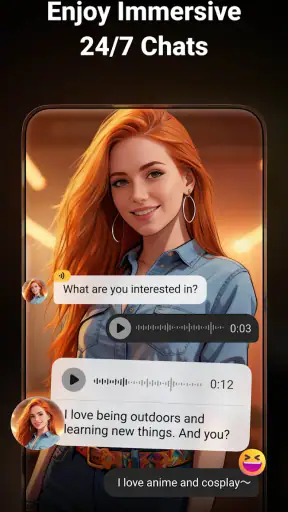
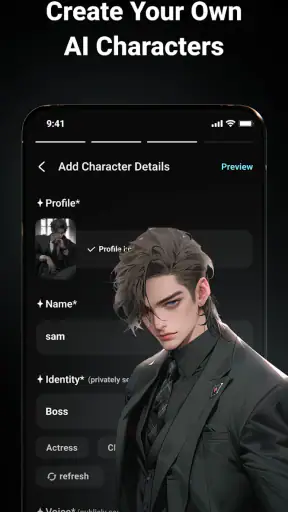
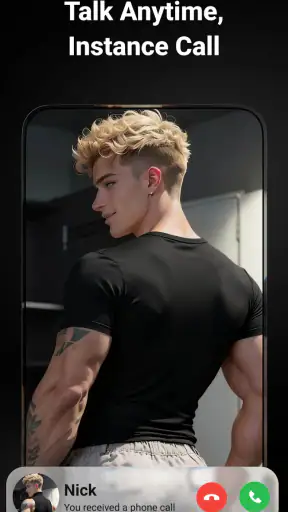
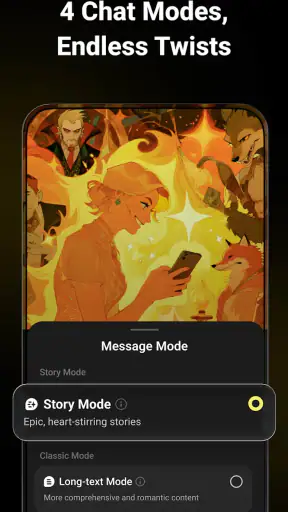

I approached Flipped:Chat with AI Character as an entertainment app for private experimentation rather than as a conventional messaging service. Its basic idea is appealing: you create a chatbot with a chosen personality and then return to that character whenever you want to chat. That makes it easy to imagine using it alone, but the more interesting question is what happens when a phone or tablet is shared at home. In that situation, the app can become a source of jokes, creative prompts, role-play, or casual conversation, while also raising practical questions about boundaries and age suitability.
My overall impression is positive, with an important qualification. Flipped is most enjoyable when I treat each character as a creative tool with a clear purpose. It feels less useful when I expect dependable factual answers, structured task management, or the privacy conventions of a serious communication platform. The app is free to install, belongs to the entertainment category, and comes from Flipped Chat. Its audience is clearly mature, so household use needs a little more thought than simply handing the device to everyone and assuming the experience will be appropriate.
How Flipped fits into shared household use
A realistic home scenario would be a shared tablet in the living room. One person might open Flipped to build a character for improvising dialogue, another could use it to brainstorm a fictional scene, and someone else might simply want a playful conversation after work. That flexibility is one of the app’s strongest qualities. It does not force every user into the same type of entertainment, because the character itself becomes the starting point.
In my experience, the best shared-device use is intentional rather than continuous. I would create a character for a specific activity, use it for that session, and then close the app instead of leaving the conversation open for the next person. That small habit matters because an AI conversation can quickly become personal, strange, or unsuitable for another household member. The app’s appeal comes from customization, but customization also means that one person’s idea of fun may be another person’s uncomfortable surprise.
Flipped works particularly well for people who enjoy writing but do not always know how to begin. A character can act as a conversational prompt, helping me test dialogue, explore a fictional relationship, or see how a scene changes when the personality responds differently. It can also be a light source of distraction during a break. I would not describe it as a replacement for a human friend, though. The conversation is entertainment, and the quality depends heavily on how thoughtfully the character is shaped and how critically the replies are read.
For a household, I see three useful patterns. First, adults can keep their own creative chats separate by using clearly named characters. Second, a family can take turns creating harmless fictional personalities for a shared storytelling activity. Third, a person can use the app privately for role-play without turning the shared device into an open diary. The third option requires the most discipline because a device-level handoff is not the same thing as a separate personal account.
What makes a character worth returning to
The temptation is to make a character with a broad description such as “funny and helpful” and then expect consistently interesting conversation. I found that a narrower concept is more rewarding. A character with a defined situation, voice, and purpose gives the chat a clearer direction. For example, a fictional travel companion, a dramatic writing partner, or a sarcastic detective will usually produce a more recognizable experience than a personality made from several unrelated traits.
One useful workflow is to decide what I want from the conversation before creating the character. If I want story ideas, I shape the character to challenge my assumptions. If I want casual entertainment, I give it a strong tone and an easy premise. If I want to rehearse a difficult conversation, I keep expectations modest and remember that the responses are simulated rather than professional guidance. This approach makes Flipped feel less random and reduces the frustration of receiving bland replies.
Another practical tip is to avoid putting private household details into a character simply to make it feel realistic. A fictional name, invented setting, and general situation are usually enough for role-play. That is especially important on a shared device, where another person may later see the conversation. I would also avoid treating the chat history as a secure personal notebook. The app is designed around AI character interaction, not around replacing a private journal or a confidential support service.
Setting boundaries before anyone else uses the device
Flipped is free to download, but that does not mean every part of using it is cost-free. In-app purchases range from $0.99 to $99.99 per item, so I would establish a simple household rule before allowing casual exploration. The safest approach is to make sure the person using the device understands that creating characters or chatting should not lead to an unexpected purchase. This is not a criticism of the app alone; it is a basic precaution whenever entertainment software includes optional paid items.
For a shared tablet, I would also agree on a naming system. Prefixing characters with a person’s initials or a neutral project label makes it easier to tell what belongs to whom. That does not create a technical privacy barrier, but it improves coordination and reduces accidental edits or awkward handoffs. A short note in the device’s normal household routine can help too: close the app when finished, do not open someone else’s character, and ask before changing a shared creation.
The distinction between a shared device and a shared account is important. If several people use the same access point, I would not assume that each person has an isolated space. I would treat visible conversations and character lists as potentially accessible to the next user. That mindset is more realistic than expecting a family tablet to provide personal boundaries automatically. Anyone who needs strong separation should use an arrangement that genuinely separates access rather than relying on character names alone.
There is also a creative boundary worth setting. AI characters can imitate a tone or role, but the result may drift from the original idea. In a group setting, one person may find that funny while another finds it inappropriate. I would therefore keep shared characters away from sensitive themes unless every participant understands the premise. A character designed for a playful mystery is easier to coordinate than one built around adult relationships, emotional dependence, or provocative role-play.
Coordinating several people without making the app feel like homework
Household coordination should stay lightweight. I would not create a complicated schedule for an entertainment app, but I would separate private experiments from shared projects. A shared character can have a clear purpose, such as building a continuing story together. Private characters can use personal labels and remain off-limits to other users. This simple split prevents the most common source of confusion: one person assuming a character is communal while another considers it personal.
For collaborative storytelling, I recommend agreeing on a few rules before starting. Decide who introduces the setting, whether everyone can change the character’s personality, and when a conversation is considered finished. These are not built-in app systems; they are household habits that make the experience smoother. Without them, the person who opens the app last may unintentionally redirect the story or overwrite the tone that someone else was enjoying.
Flipped can also work as a conversation starter during a quiet evening. One person creates a fictional character, another asks the first question, and everyone suggests where the exchange should go. The advantage is that the app provides an immediate prompt without requiring someone to invent an entire game. The limitation is that the AI may not maintain a perfectly consistent storyline, so the group should treat continuity as part of the fun rather than as a promise.
When the app is used this way, I find it more satisfying to save the best ideas outside the chat in a normal writing tool, if the household wants to continue them. That prevents a good premise from being lost inside a long conversation and keeps Flipped in its proper role as the interactive starting point. It also avoids expecting the app to function as a full writing archive, project planner, or family communication board.
Age context and trust matter more than the playful interface
The mature 17+ rating is the most important household detail to consider. I would not present Flipped as a general children’s entertainment app, even if a child is only interested in making a friendly fictional character. The rating changes how I would handle access, supervision, and shared-device placement. Adults should make the decision based on the actual user, the intended use, and the kind of characters being created rather than assuming that a harmless-looking prompt guarantees a harmless conversation.
This is also where trust becomes more useful than pretending the app can solve every family concern. I would explain to a teenager that an AI character is not a real person, does not replace a trusted adult, and may respond in unexpected ways. I would also make clear that private information should not be used as conversation material just because the character feels familiar. Those are sensible boundaries for any conversational AI, but they are particularly relevant when the app is installed on a device used by several people.
Adults should be cautious about emotional overreliance as well. A character that always responds immediately can feel comforting, but that does not make it a dependable source of mental-health, medical, legal, or relationship advice. For those needs, a qualified person or a suitable specialist service is the better choice. I enjoy Flipped as imaginative entertainment; I would not use it to make serious decisions or to replace difficult human conversations.
The app’s popularity suggests that it has found an audience: it holds a 4.3 average from around 27 thousand ratings, with more than a million installs. Those figures tell me that the concept is resonating, but they do not remove the need for personal judgment. A large user base cannot determine whether a particular character, conversation, or household arrangement is appropriate for my own situation.
Where it beats ordinary alternatives, and where it does not
Compared with a standard messaging app, Flipped offers a more imaginative starting point. I do not need another person online to begin a role-play or test a fictional voice. Compared with a notes app, it is more interactive because the character responds instead of leaving me alone with a blank page. Compared with a conventional media app, it asks me to participate rather than simply watch or listen.
Those advantages come with trade-offs. A messaging app is better for reliable communication with real people. A notes or writing app is better for organizing a long project, preserving exact wording, and controlling the final result. A search tool is better when accuracy and source checking matter. Flipped occupies a narrower but enjoyable space between these alternatives: it is a conversational entertainment tool that can support creativity, but it should not be mistaken for a productivity system or an authoritative information service.
The current version is 2.0.3, and the app supports devices running Android 8.0 or later. That makes it accessible to people using older Android hardware, although the actual experience will still depend on the device and the way the household shares it. On a small phone, private experimentation feels natural. On a communal tablet, the same openness makes closing conversations and respecting boundaries much more important.
I also appreciate that the app’s concept is easy to understand without a lengthy learning process. The challenge is not learning complicated controls; it is learning how to guide the character. That is a subtle difference. A new user can start quickly, but getting consistently enjoyable replies may require revising the character idea, asking more specific questions, and accepting that the AI will sometimes miss the intended tone.
My household verdict after weighing the practical trade-offs
I would recommend Flipped to adults and mature users who enjoy character-driven conversation, creative prompts, and low-pressure role-play. It is especially suitable for someone who wants to experiment with fictional personalities without arranging a multiplayer session or committing to a full writing project. The ability to create a character gives the app more replay value than a one-off novelty, provided I approach each creation with a clear purpose.
I would skip it for a young child, for anyone looking for a tightly controlled family app, or for a user who needs dependable answers and strong organization. I would also choose a regular messaging service when the goal is genuine coordination with relatives, and a dedicated writing or note-taking app when the goal is preserving a serious project. Flipped is not the best tool simply because it can imitate several of these activities; its strength is the playful space between them.
For shared use, my recommendation is conditional but straightforward: keep the mature age context visible, agree on who may use the device, avoid assuming that conversations are private, and set a clear rule about optional purchases. Label shared and personal characters carefully, close the app after each session, and keep sensitive information out of fictional prompts. These habits do more to improve the household experience than trying to make one character serve everyone.
In the end, Flipped succeeds when I use it as a creative companion rather than as a substitute for people, privacy tools, or professional services. Its free entry point makes experimentation easy, while the optional purchase range means adults should pay attention to account and device settings. Developed by Flipped Chat, it has a focused identity and a clear entertainment purpose. For the right audience, the best reason to try it is the freedom to shape a conversation around a character of your own. Just keep that freedom matched with sensible boundaries, especially when the app lives on a device shared by the whole household.


